

Hypnotherapy for Panic Attacks

Has your body ever hit the panic button in the middle of something completely ordinary?
You're in the queue at the supermarket, or driving home on a road you know well, or sat on the sofa with a cup of tea.
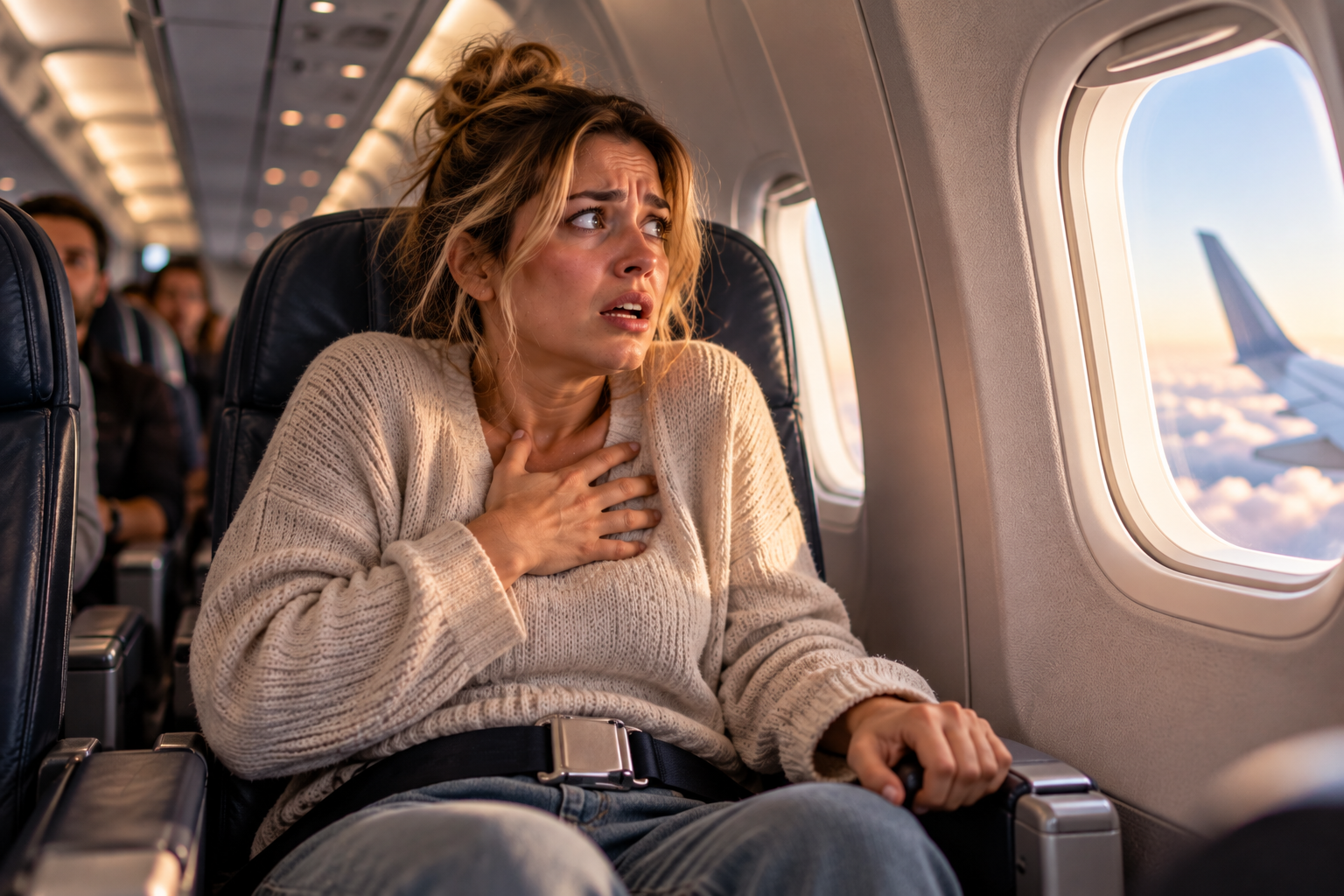
Then your heart starts pounding. Your chest tightens, your hands go tingly, the room feels too bright and too far away, and one thought takes over: something is very wrong.
Maybe you've ended up in A&E convinced it was your heart.
Maybe you've left a full trolley in the middle of an aisle and sat in the car until it passed.
Afterwards you're shattered, a bit embarrassed, and already wondering when the next one will come.
Hypnotherapy for panic attacks works with the part of your brain that keeps pressing that button.
I'm Emma Fogg, an award winning hypnotherapist, and I work online with people across the UK and worldwide who are tired of planning their lives around panic.

What a panic attack can feel like
A panic attack is a sudden rush of intense fear that hits your body as hard as your mind. It can bring:
A racing or pounding heart
Tightness or pain in your chest
Feeling like you can't get a full breath
Dizziness or feeling faint
Tingling in your hands, feet or lips
Shaking, sweating, or hot and cold flushes
Feeling sick or a churning stomach
Feeling detached, as if you're watching yourself from the outside
A sudden, overwhelming need to get out
Being sure you're about to collapse, lose control or die
The NHS says most panic attacks last between 5 and 20 minutes. When you're in one, every minute feels far longer.
If you've never had chest pain, breathlessness or palpitations checked by a doctor, please speak to your GP first. Once you've been told your body is healthy, the rest of this page is for you.
Why panic attacks can feel like you're dying
When adrenaline floods your system, your heart beats faster and harder, which can feel like palpitations or chest pain. You start breathing quickly, which lowers the carbon dioxide in your blood and brings on tingling, light-headedness and that strange, unreal feeling.
Your brain notices all of this and reads it as proof that something is seriously wrong, so it releases more adrenaline. That loop is why a panic attack can climb so fast, and why it feels so convincing while it's happening.
I've written more about this in my blog on why panic attacks feel like you're dying.

Why panic attacks happen: meet your caveman brain
Deep in your brain is a very old part I call the caveman brain. Its job is to keep you alive, and when it senses danger it floods you with adrenaline so you can fight or run.
Imagine a polar bear walking into the room. Your heart races to pump blood to your muscles, your breathing speeds up, your digestion shuts down and your focus narrows to one thing: get out. That's the perfect response to a polar bear.
The trouble is that your caveman brain can't tell a polar bear from a crowded shop, a hot train or a skipped heartbeat. It fires the same alarm for all of them.
Then there's the stress bucket. Every worry, every bad night's sleep and every bit of pressure you're carrying goes into it. We empty it naturally during REM sleep, the dreaming part of the night. When it's filling faster than sleep can empty it, the caveman brain stays on high alert, and the smallest trigger can tip it into a full panic.
That's why a panic attack can arrive on a day when nothing in particular is wrong. Often the bucket had been filling up for weeks beforehand.
Panic attacks and anxiety: what's the difference?
Anxiety tends to be a background hum of worry and tension that can last for days or weeks. A panic attack is a sudden surge that peaks within minutes. The two are closely linked, and many people live with both: the anxiety fills the stress bucket, and a panic attack is what happens when it overflows.
If your panic usually starts with worrying about a symptom, my page on hypnotherapy for health anxiety may help too. For a wider look at anxiety, see hypnotherapy for anxiety.
What you can do during a panic attack
These won't change why the alarm keeps going off, which is what sessions are for, but they can help you ride one out.
Name it. Say to yourself, "This is adrenaline. It's uncomfortable and it will pass." Naming what's happening gives the thinking part of your brain something to hold on to.
Breathe out for longer than you breathe in. Try in through your nose for a count of 4, then out through your mouth for a count of 7. A long out-breath is one of the quickest ways to tell your body it's safe.
Feel your feet. Press them into the floor, then notice five things you can see, four you can hear and three you can touch.
Try the butterfly hug. Cross your arms over your chest, rest your hands just below your collarbones and tap slowly, left then right, while you breathe.
Stay where you are if it's safe to. Leaving teaches your brain that the place was dangerous. Staying, even for a few minutes, teaches it the opposite.
The fear of the next panic attack
For many people the attacks themselves become the smaller problem. The bigger one is the constant watching and waiting for the next one.
You might notice yourself:
Sitting near the door, or at the end of the row
Carrying water, mints or your phone everywhere, just in case
Only driving routes you know, or not driving alone
Avoiding the gym because a raised heart rate feels too familiar
Turning down plans, then feeling guilty for letting people down
Checking your pulse or your breathing whenever things go quiet
Each of these brings a little relief, so your brain learns to rely on them, and your world gets a little smaller every time.
I know this one personally. My own panic attacks started in a place I'd been to a hundred times, and before long more and more places felt unsafe. Some days I couldn't open my curtains. Hypnotherapy is what helped me go back to every one of those places, and it's why I do this work now.
How hypnotherapy helps with panic attacks
Each session has two parts.
First we talk. Solution Focused Hypnotherapy looks forward rather than back, so we don't pick over every attack you've ever had. We look at how you want life to feel when panic isn't calling the shots: where you'd go, what you'd say yes to, and what's already going a little better than you'd noticed.
Then you relax into hypnosis. It's a focused, deeply relaxed state, much like the one you drift into when you're driving a familiar road and can't remember the last few junctions. In that state the caveman brain settles, the stress bucket empties, and the calmer, more rational part of your brain gets more say in how your body's signals are read.
Over a few sessions, many people find the gap between panic attacks gets longer, and the ones that do come feel less frightening and pass more quickly.
Where it helps I also use other techniques, such as the rewind technique when one particular attack keeps replaying, like the one on the motorway or in the middle of a meeting.
You're awake, aware and in control the whole time.
Does hypnotherapy work for panic attacks?
Panic attacks are a form of anxiety, and a 2019 review of the clinical trials, published in the International Journal of Clinical and Experimental Hypnosis, found that people who had hypnosis reported lower anxiety than those who didn't.
What I can tell you is what makes the biggest difference: understanding what your brain is doing, coming with a clear picture of what you want, and doing the small amount I ask of you between sessions.
If you've already tried the NHS route
Plenty of the people who come to me have already been through NHS Talking Therapies, often after a long wait. Some found it helpful. Others were handed a breathing leaflet or a prescription, and nobody ever explained why their body kept doing this.
That explanation is where we start.
Hypnotherapy works alongside anything your GP has suggested, including medication. Please don't stop or change anything you've been prescribed without talking to them first.
Frequently asked questions about hypnotherapy for panic attacks
Can hypnotherapy stop panic attacks?
Hypnotherapy calms the stress response that drives panic and many people find their attacks come less often, feel less intense and stop running their lives.
We'll talk about what you can realistically expect on your discovery call.
What makes the biggest difference is understanding what your brain is doing, coming with a clear picture of what you want, and doing the small amount I ask of you between sessions.
How many sessions will I need?
It depends on you and how long panic has been part of your life. Most people come for a handful of sessions rather than months, and we keep checking in as we go so you never book more than you need.
What if I have a panic attack during hypnosis?
It's very unlikely, because hypnosis is deeply relaxing and the caveman brain settles as you go into it. If you ever felt uncomfortable, you can open your eyes and talk to me at any point. You're in control the whole time.
Do I have to talk about my first panic attack?
No. Solution Focused Hypnotherapy looks forward, so you don't need to relive anything. If one memory keeps setting the alarm off, there are gentle techniques for that, and we'd only use them with your agreement.
Can hypnotherapy help with panic attacks while driving?
Yes, it's one of the most common things I see. My blog on panic attacks while driving alone explains why it happens, and there's more on my fear of driving page.